What are you looking for?
Search

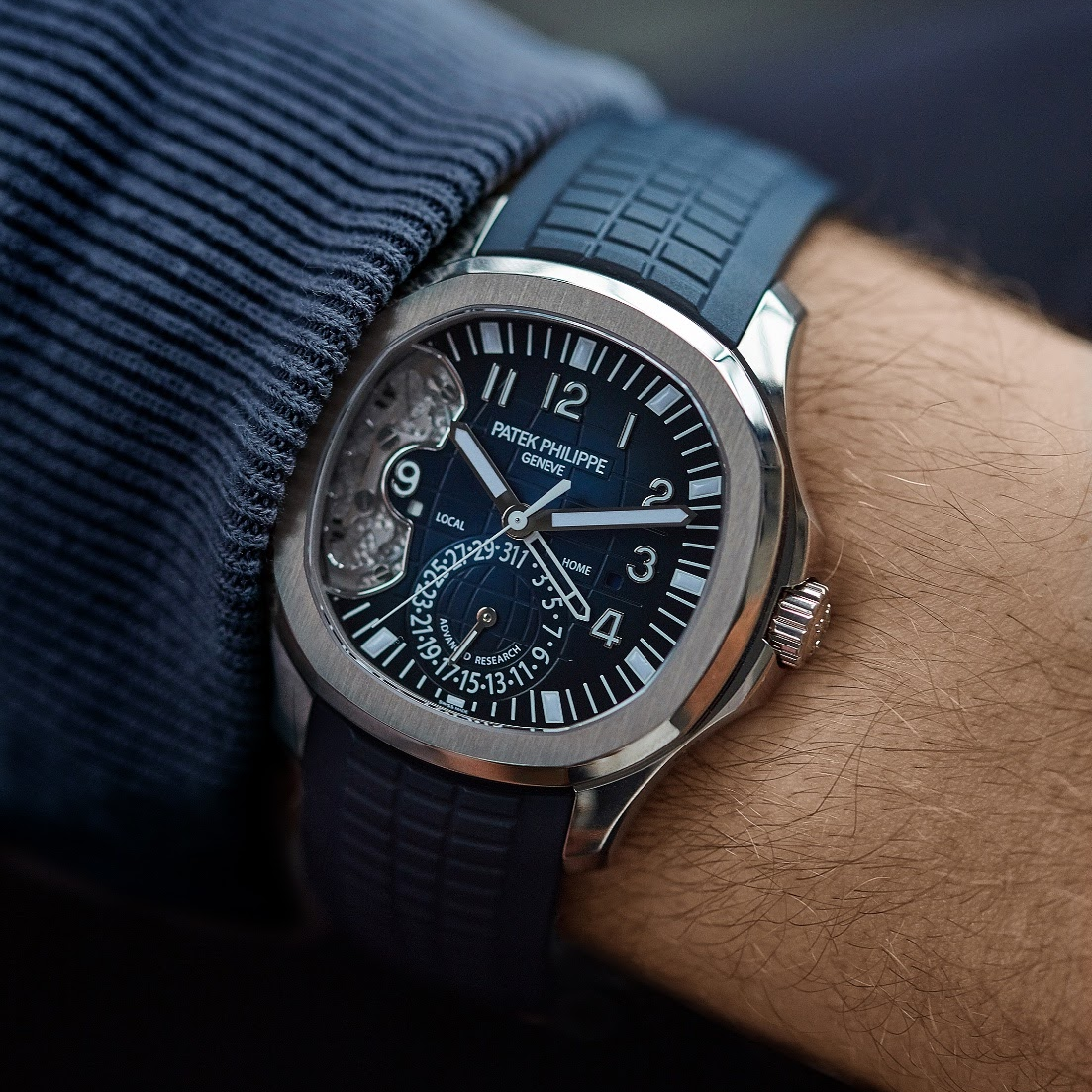

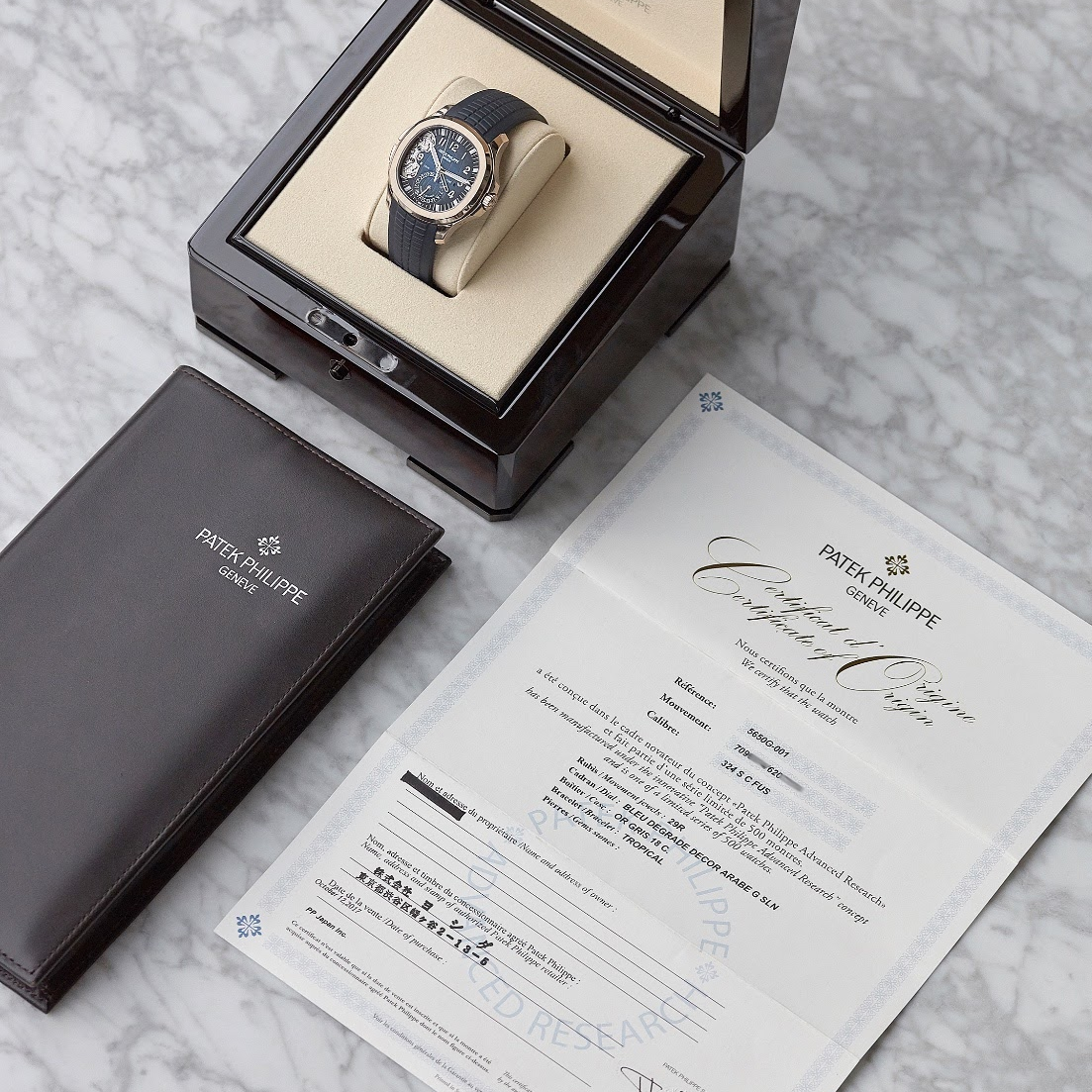

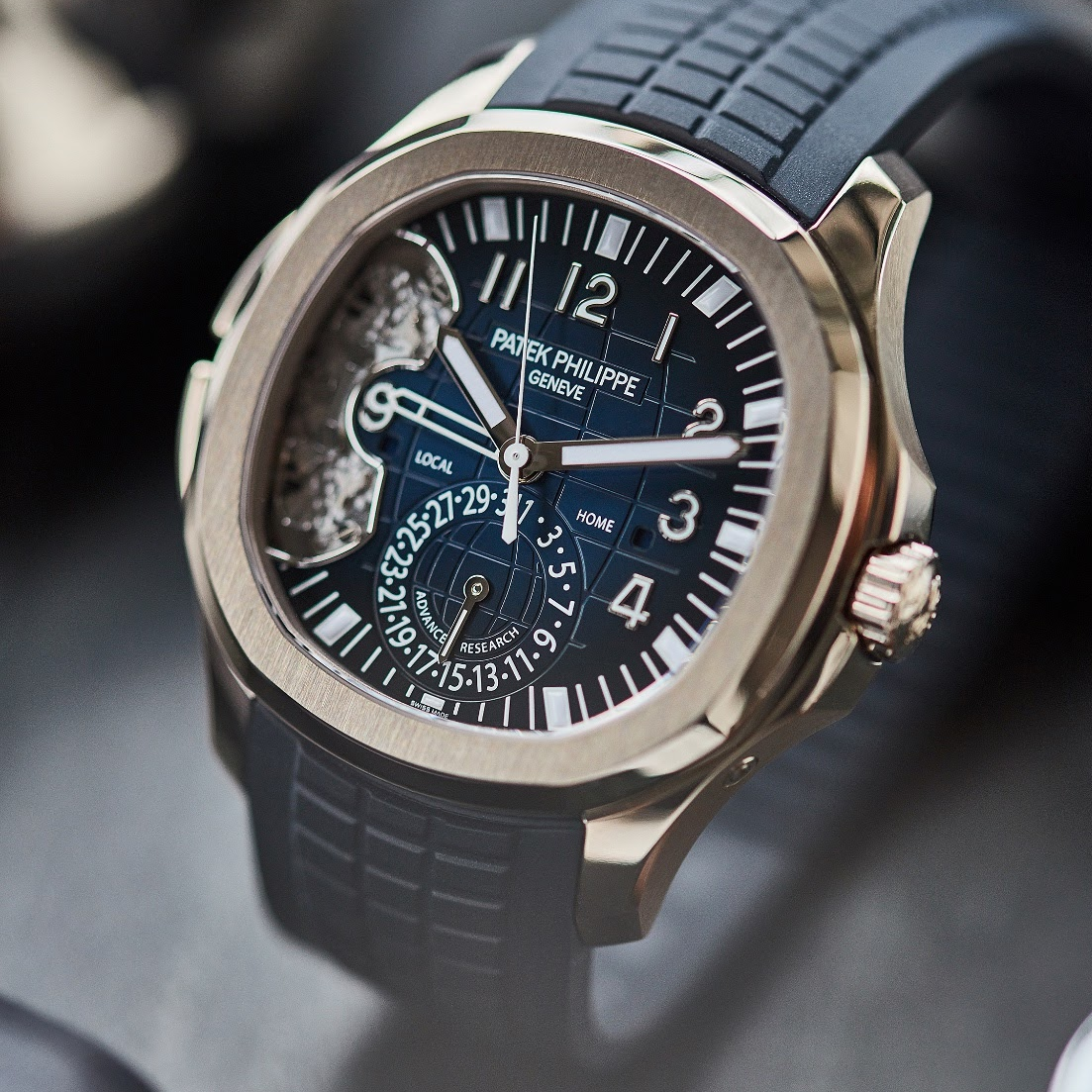
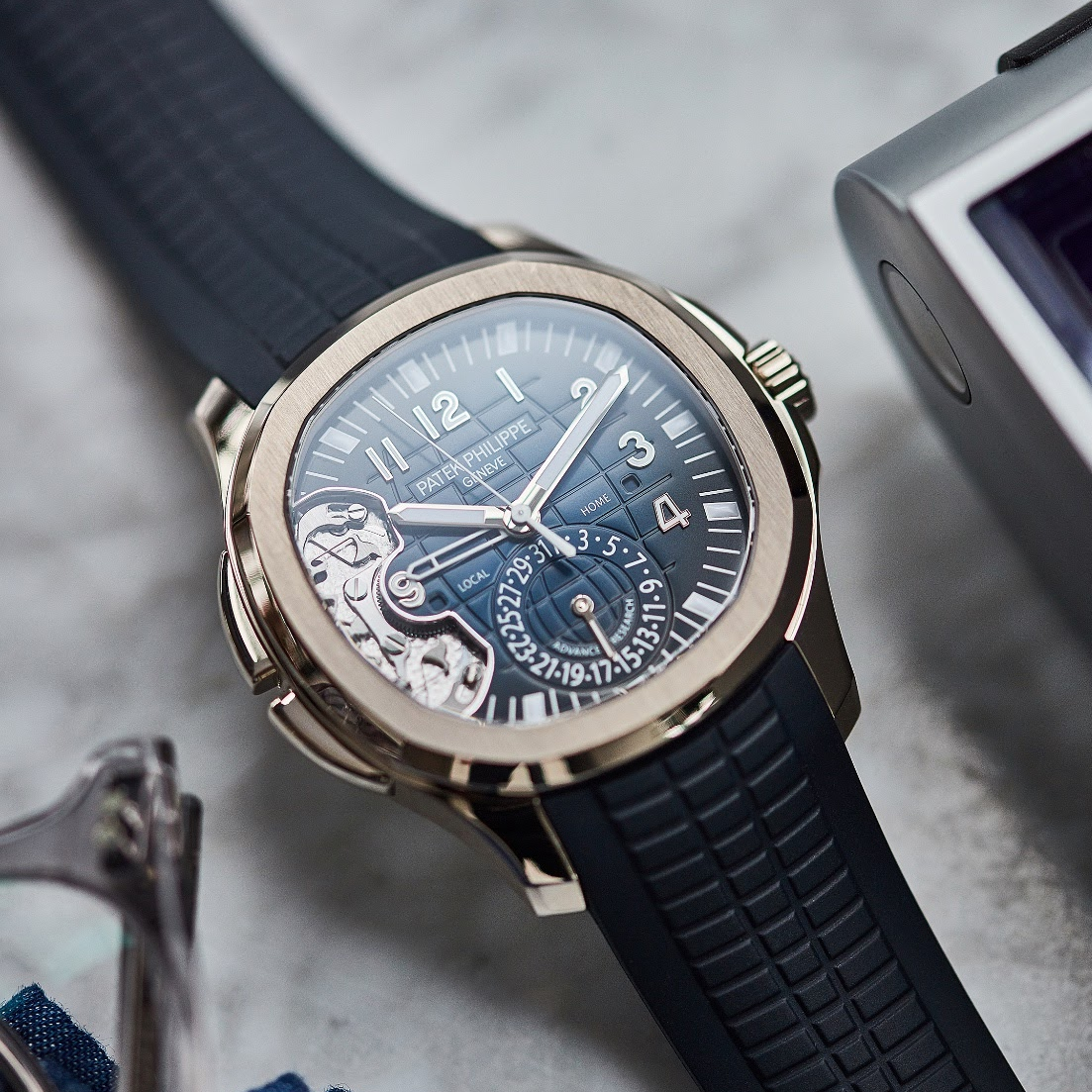
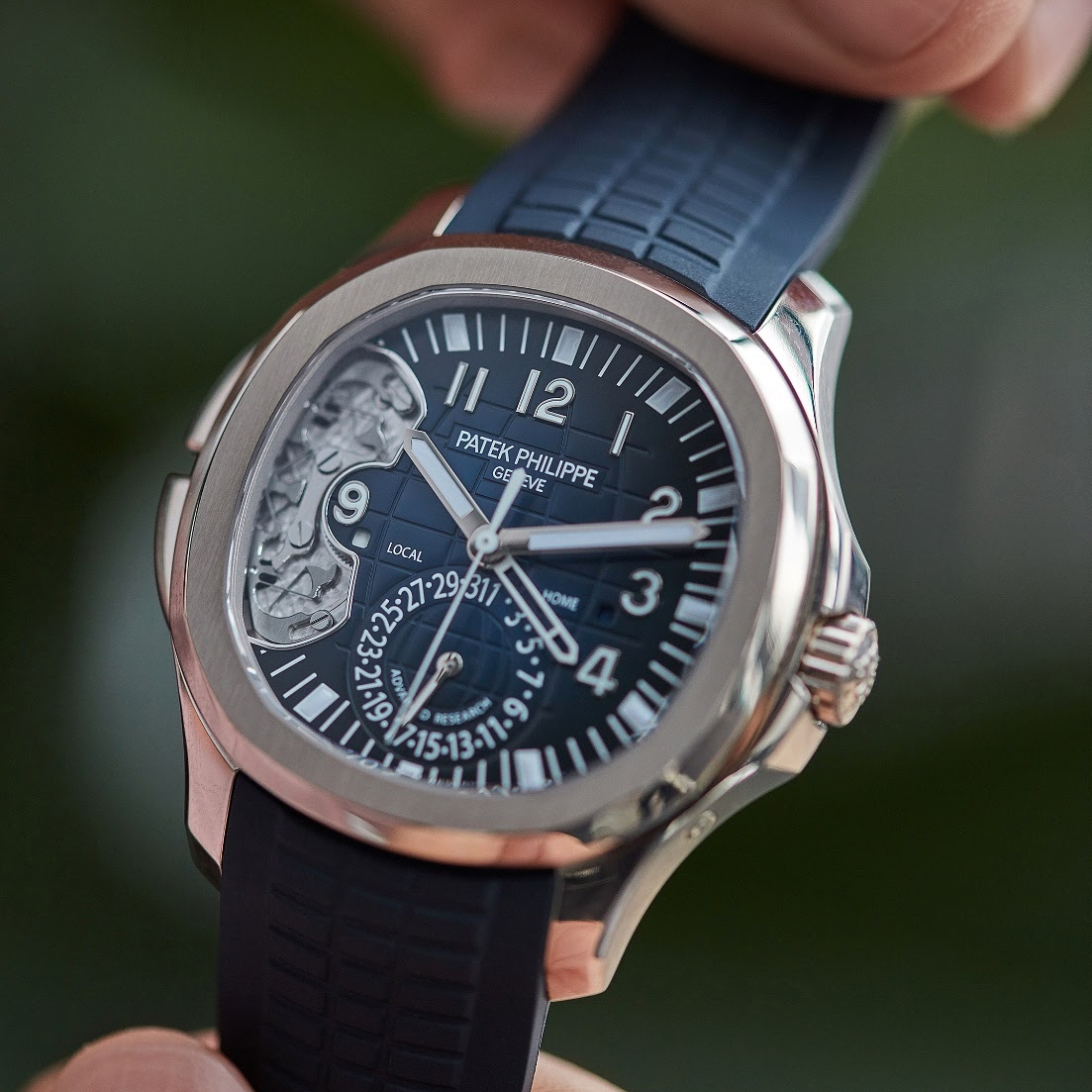
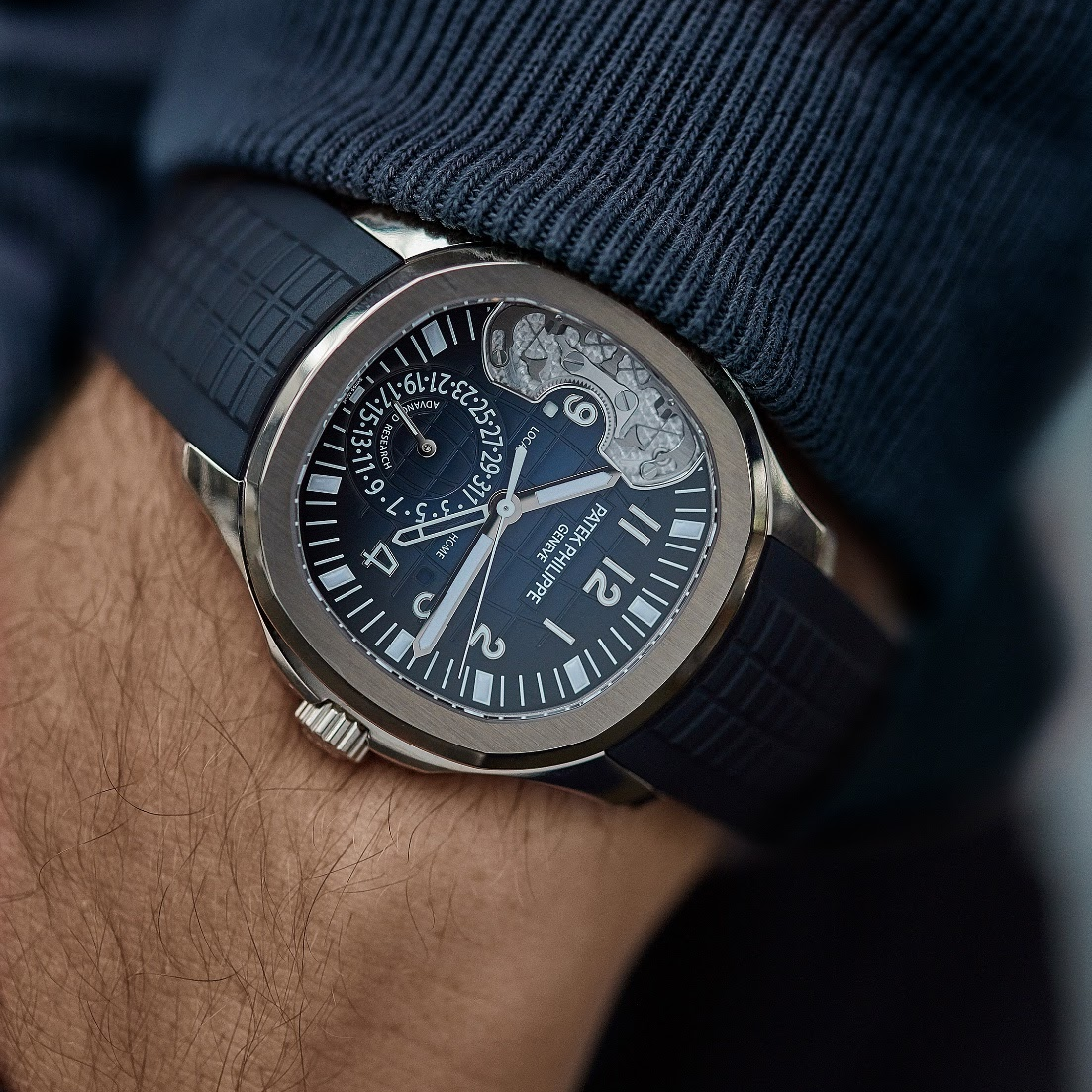

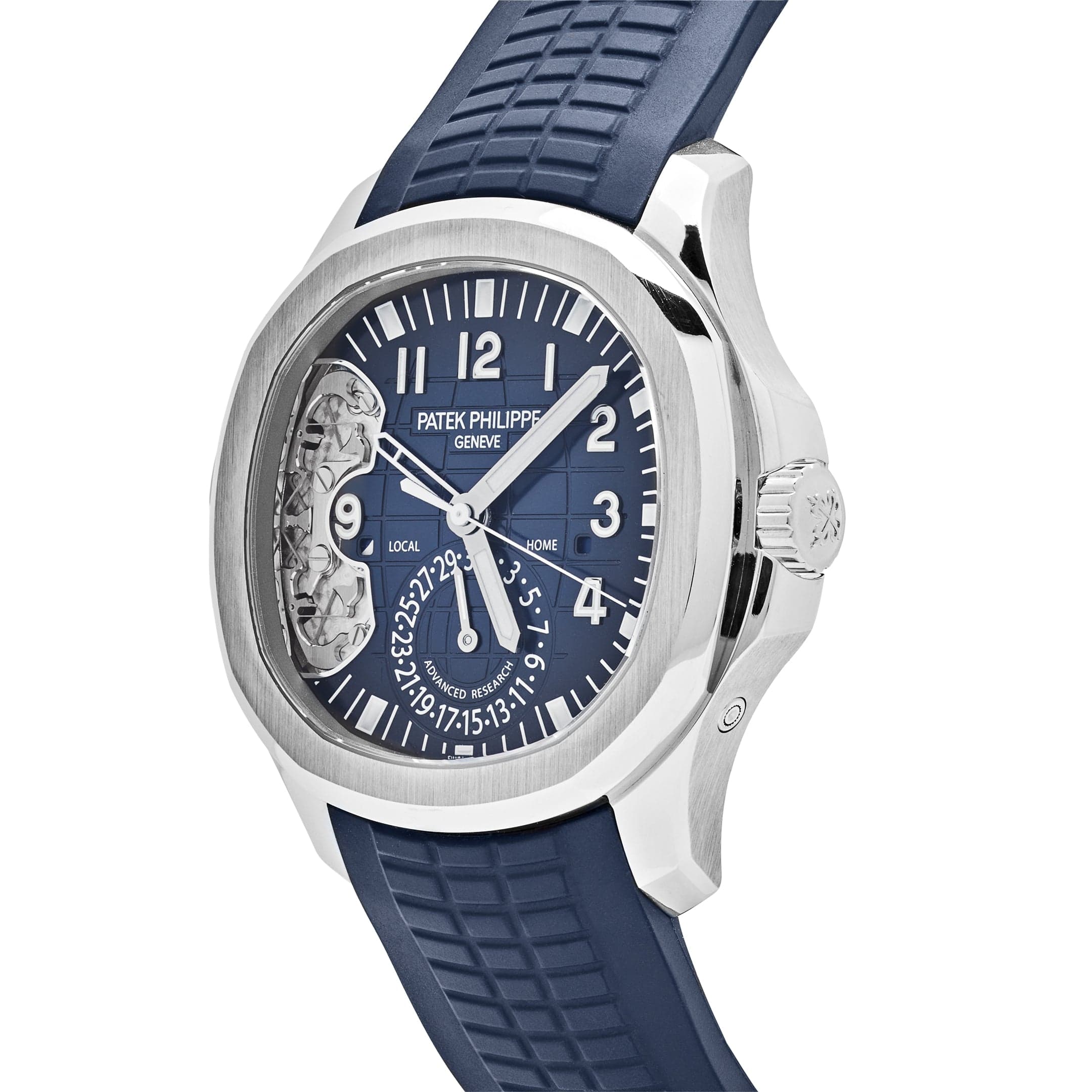
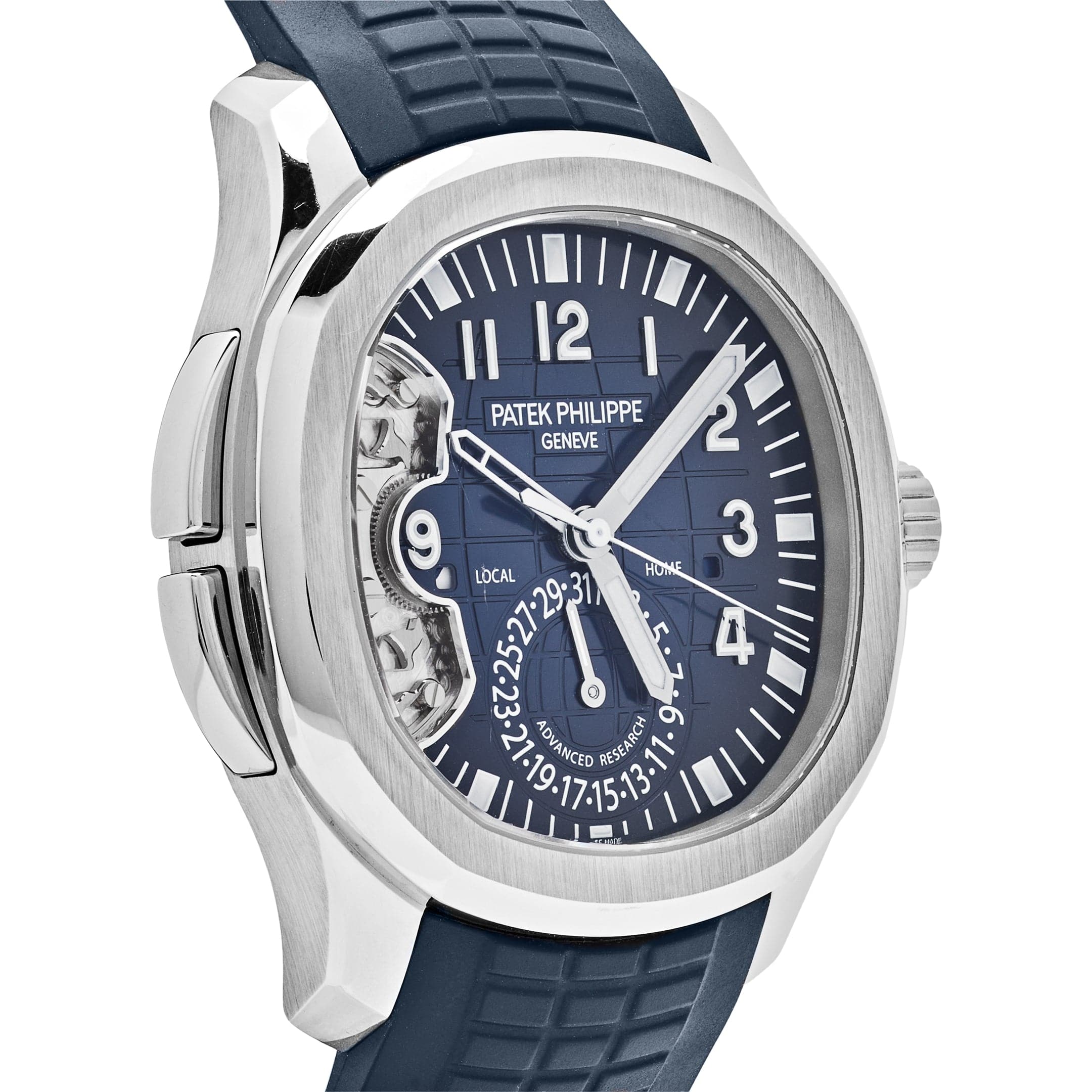
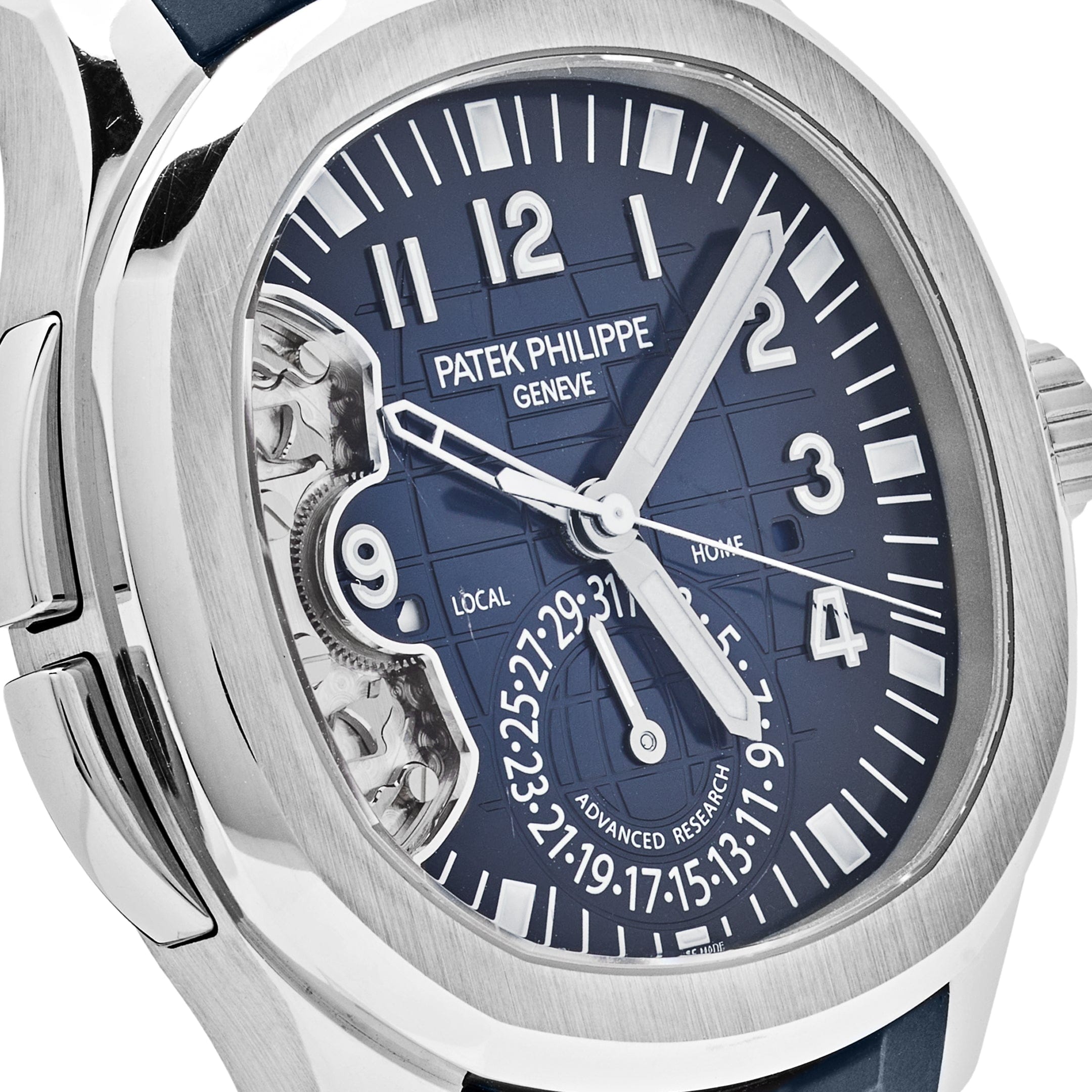


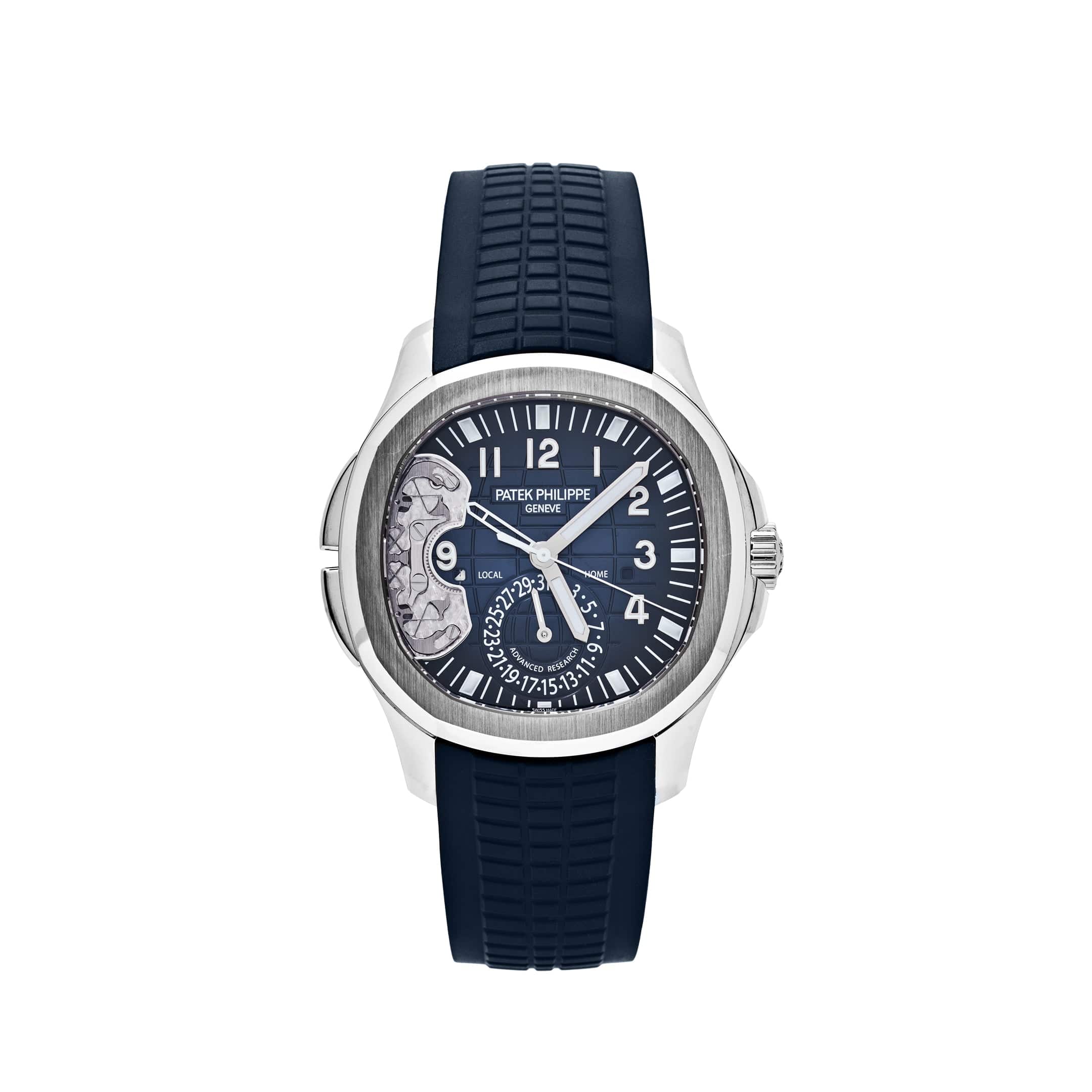
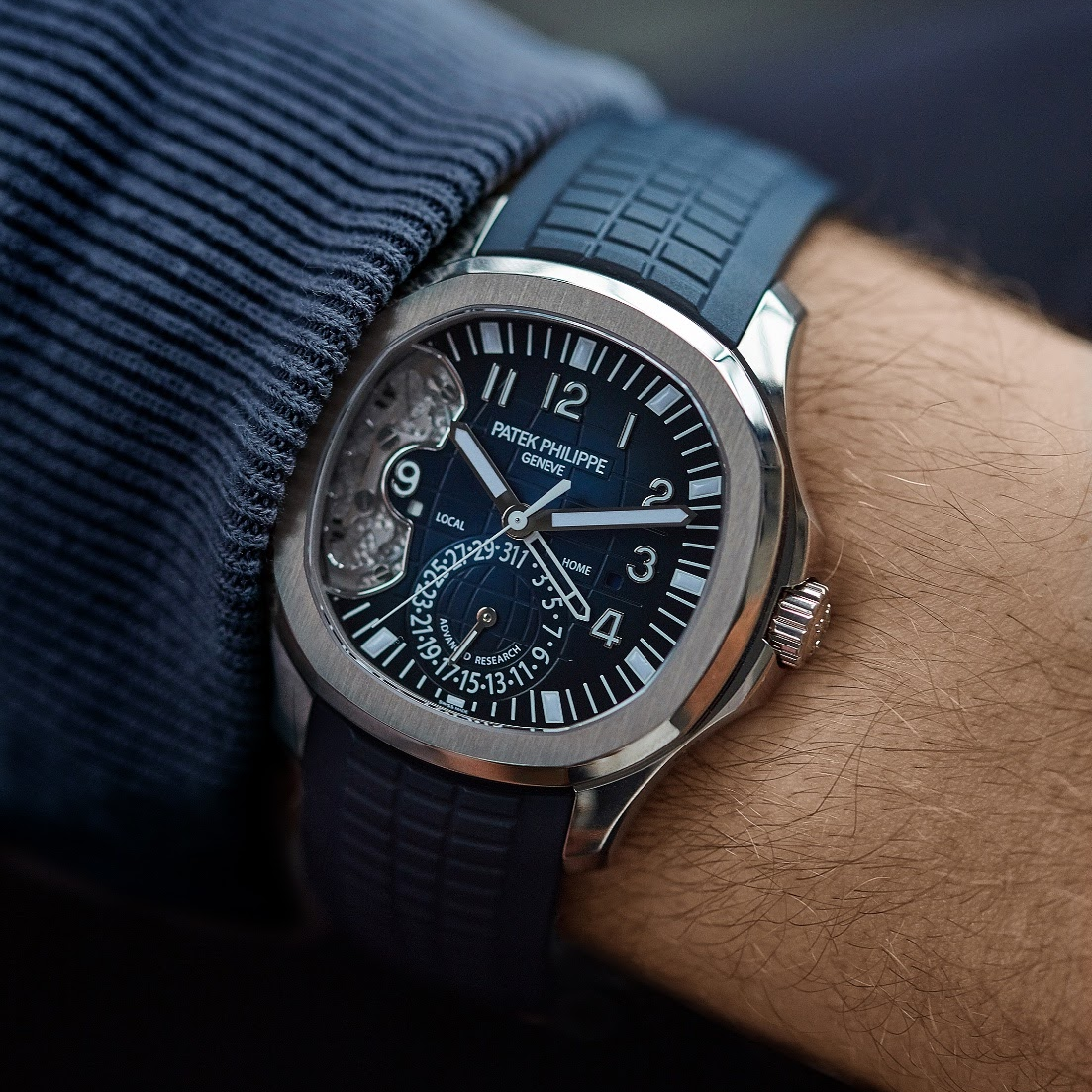

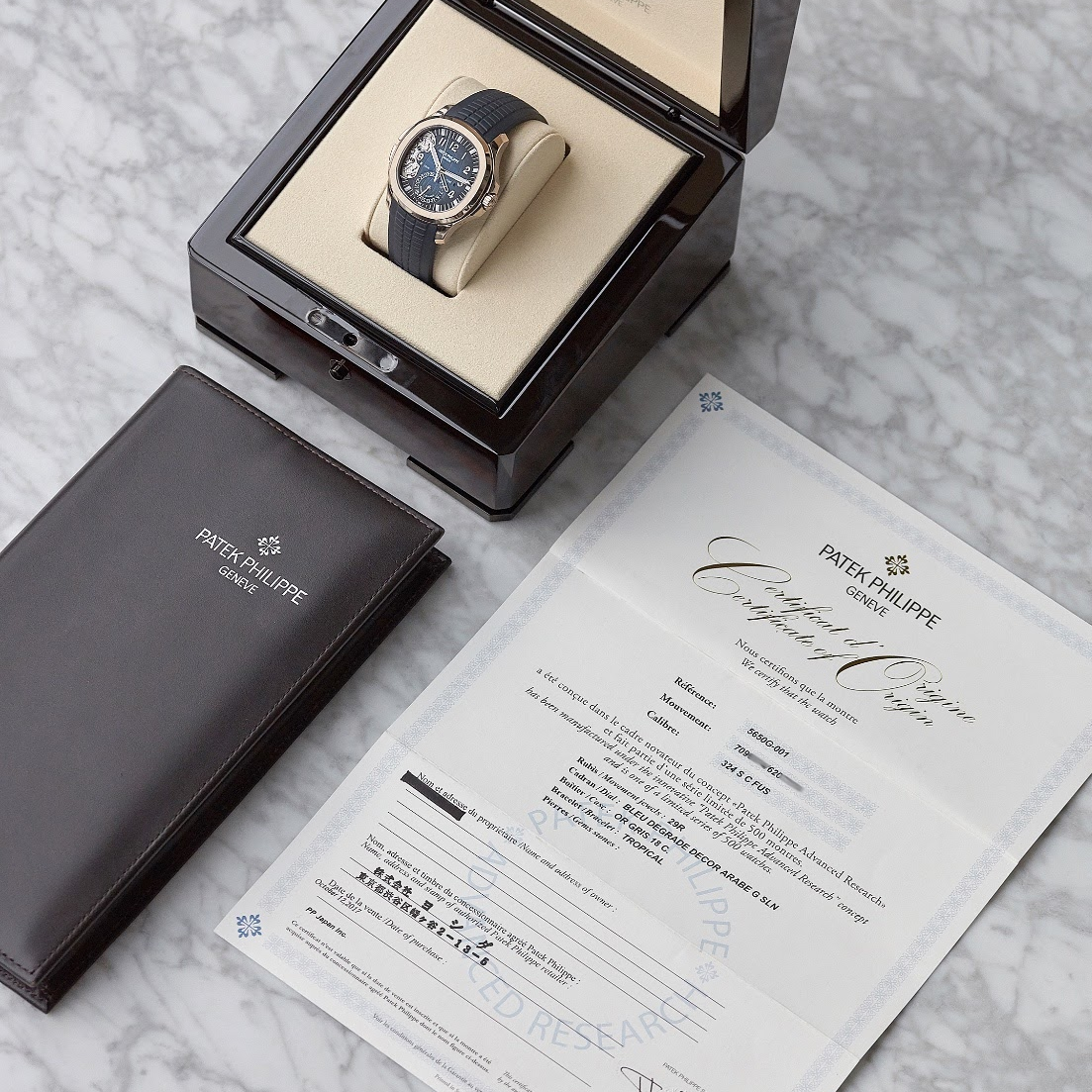

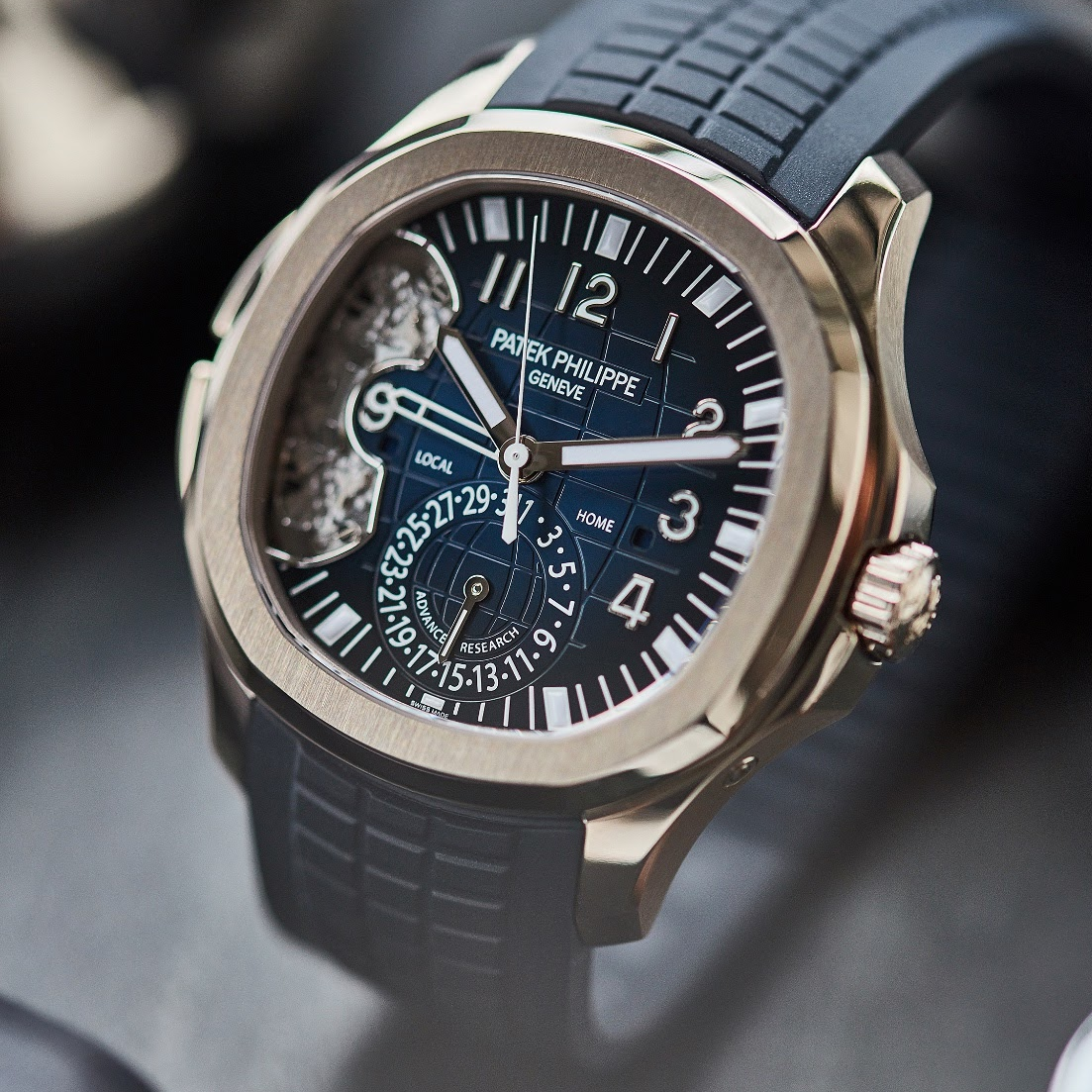
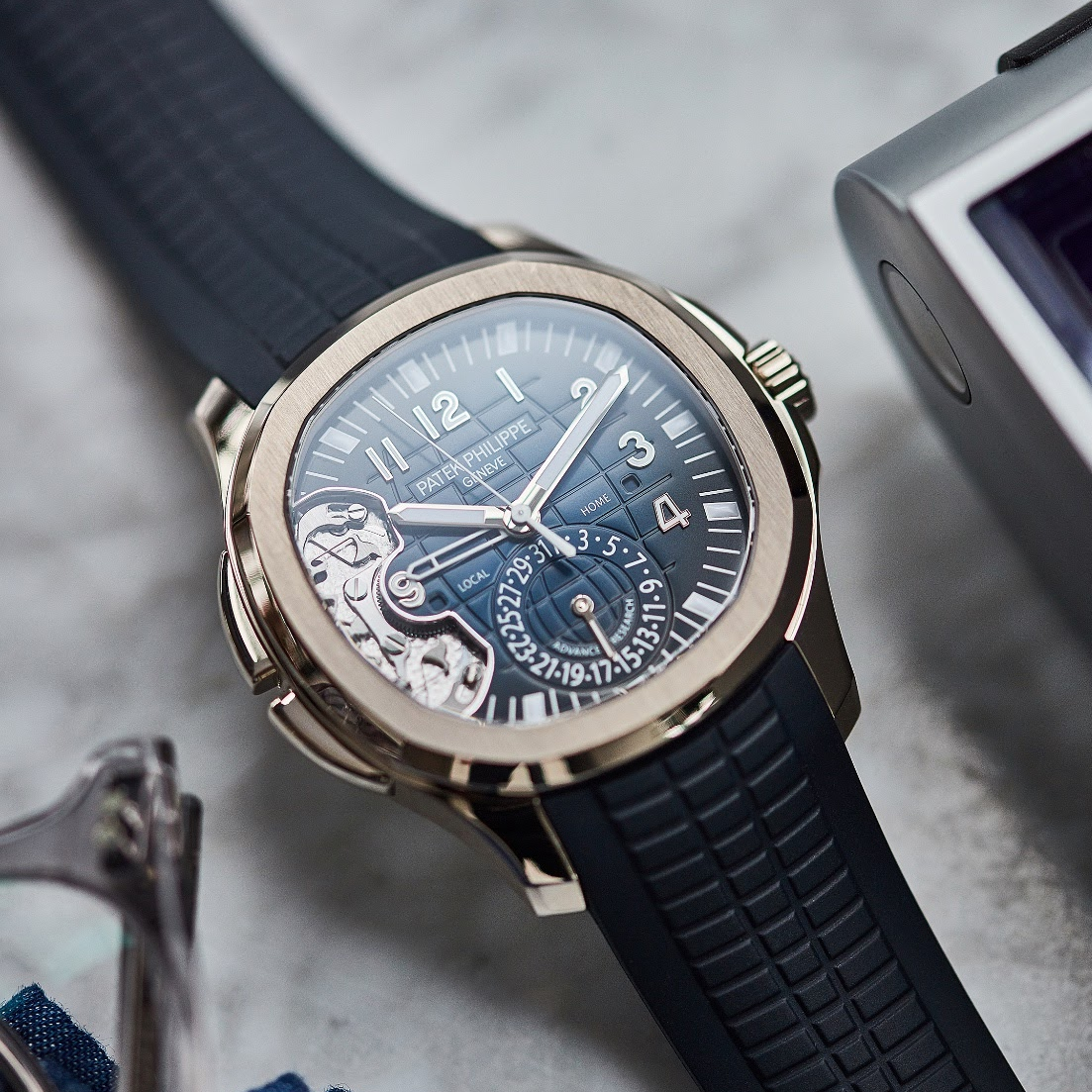
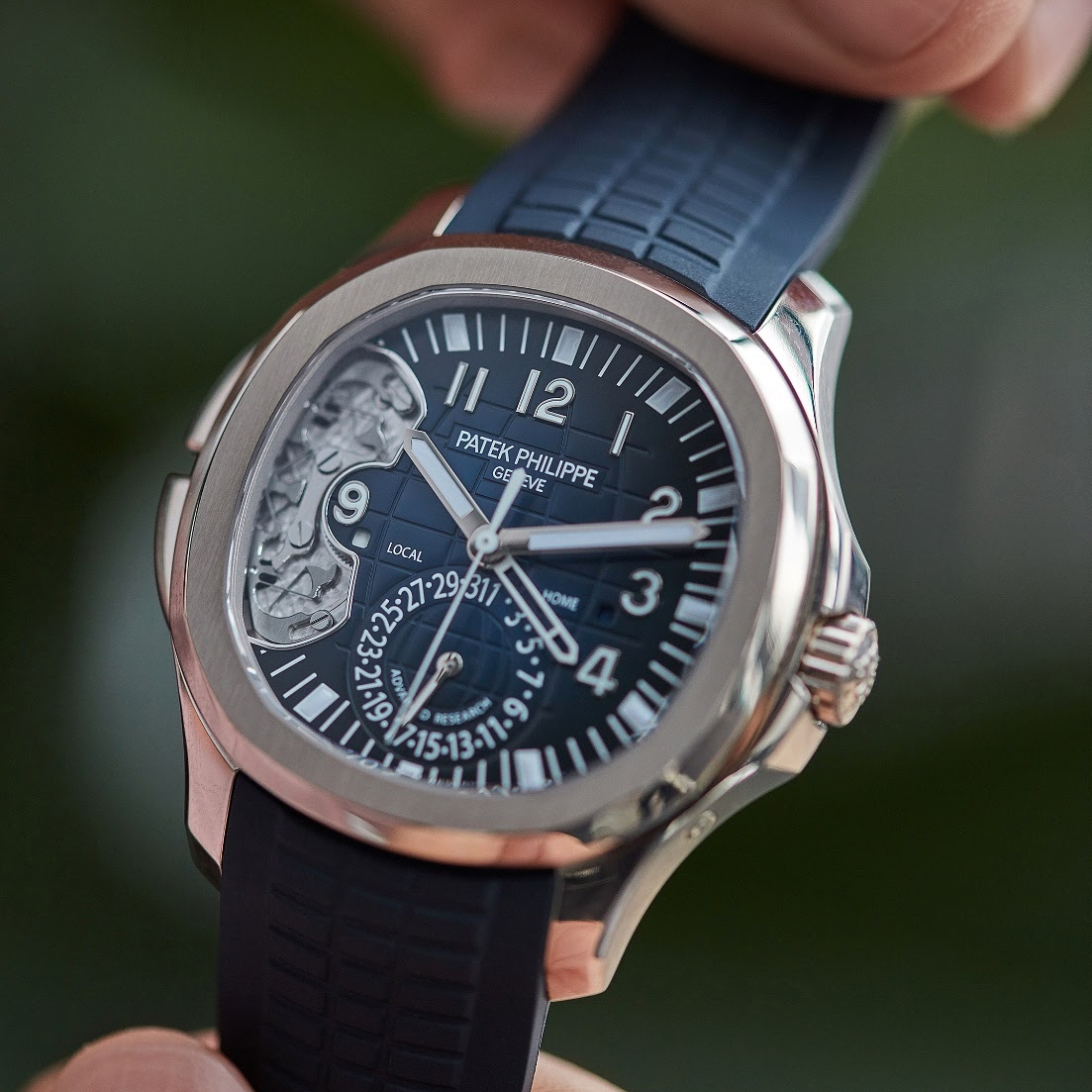
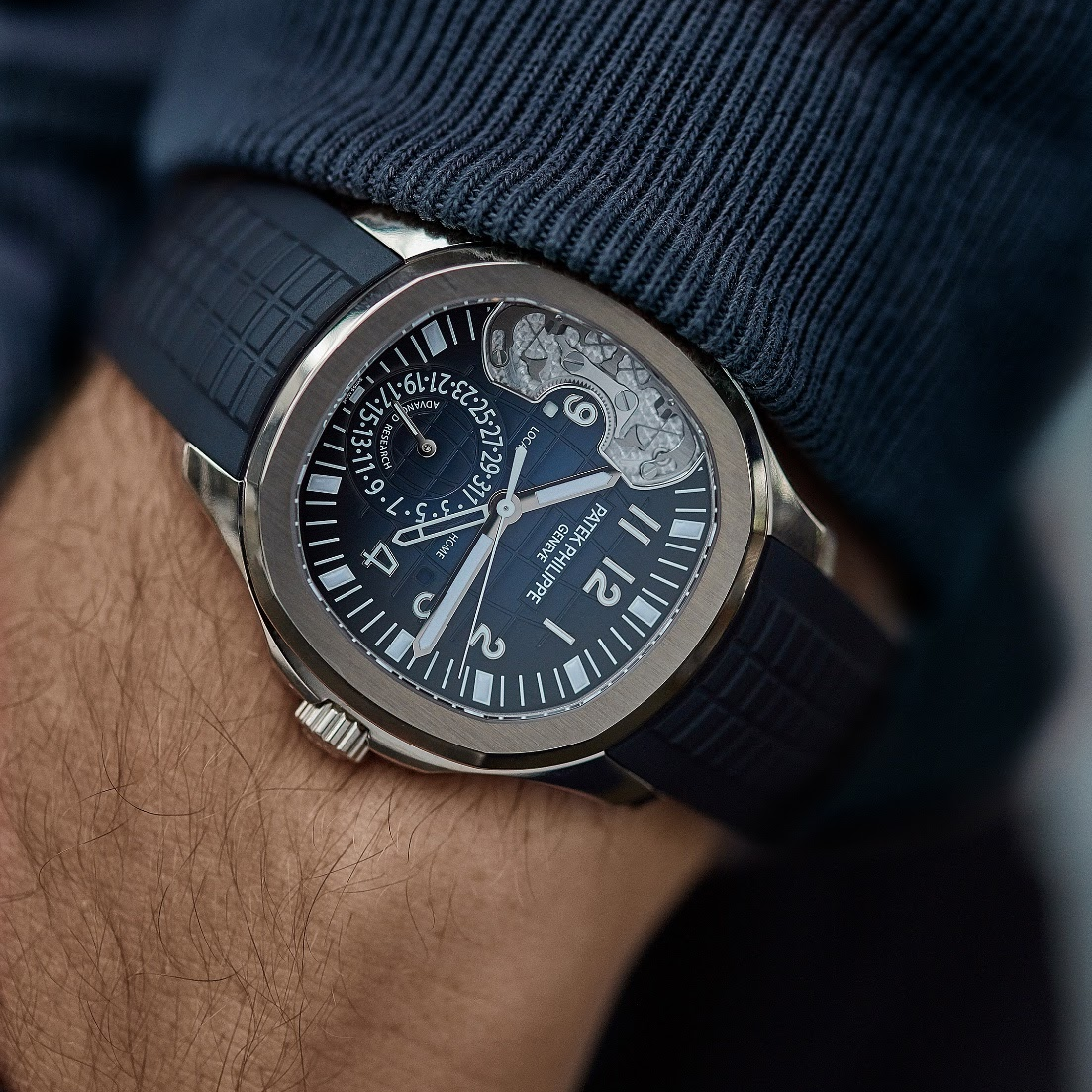

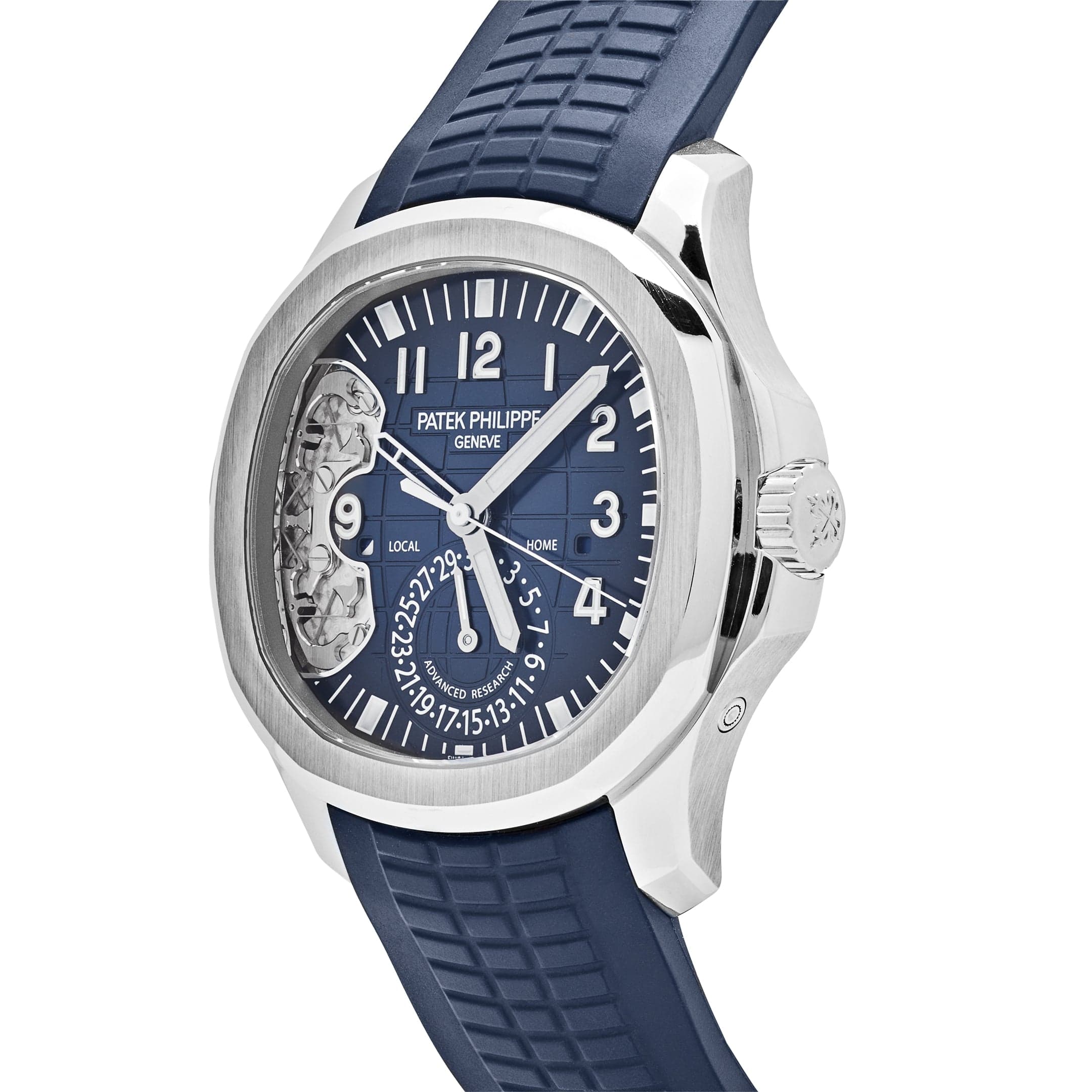
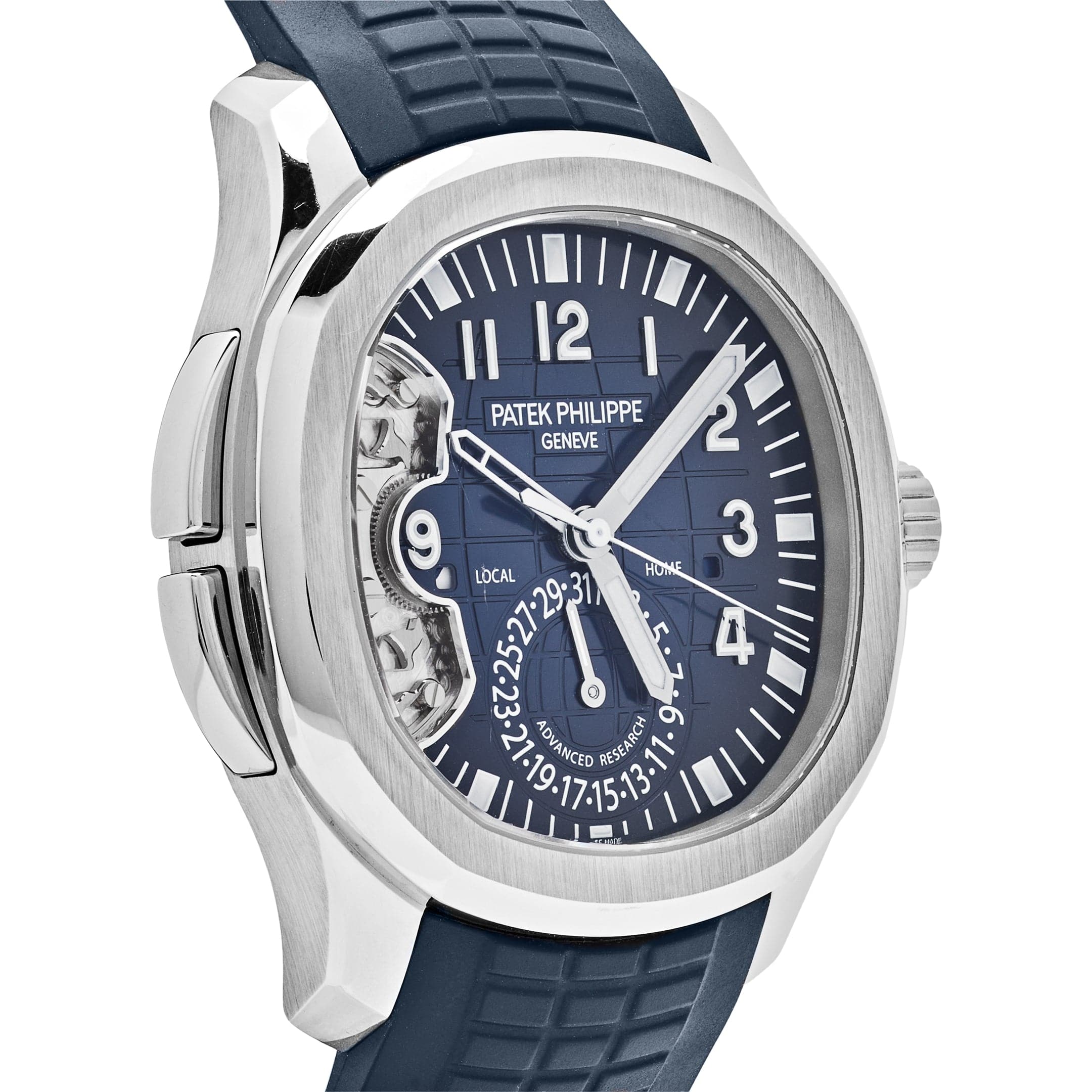
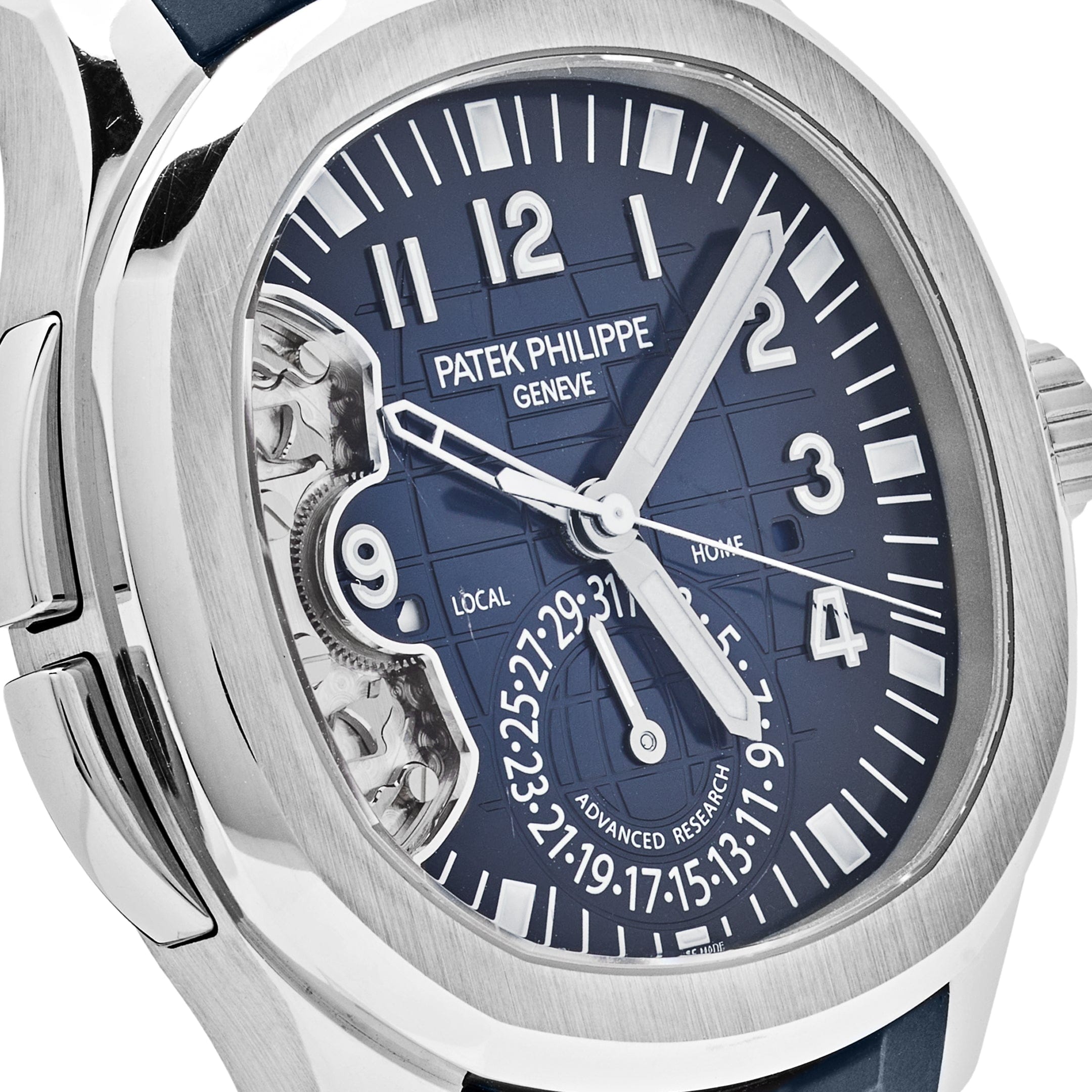


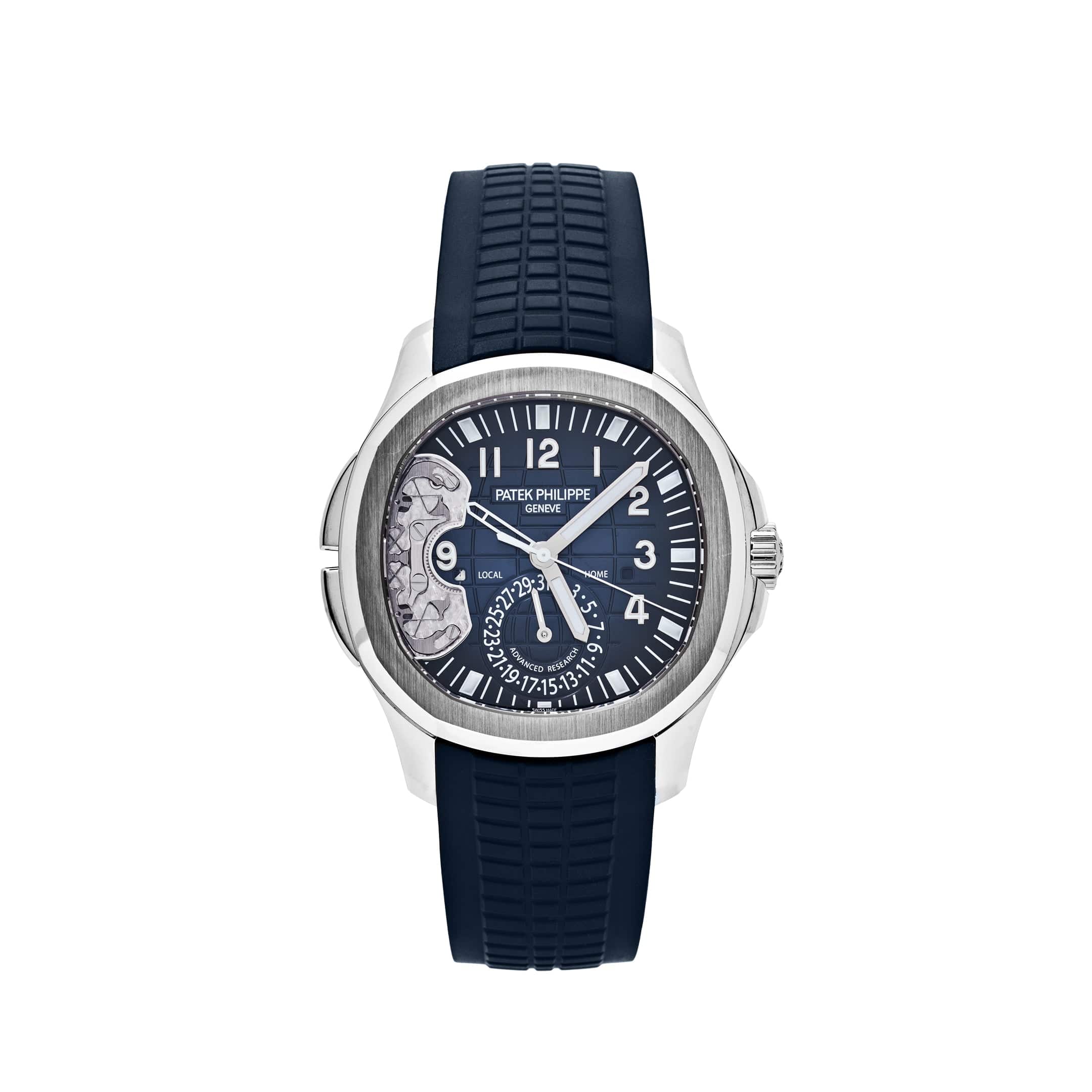

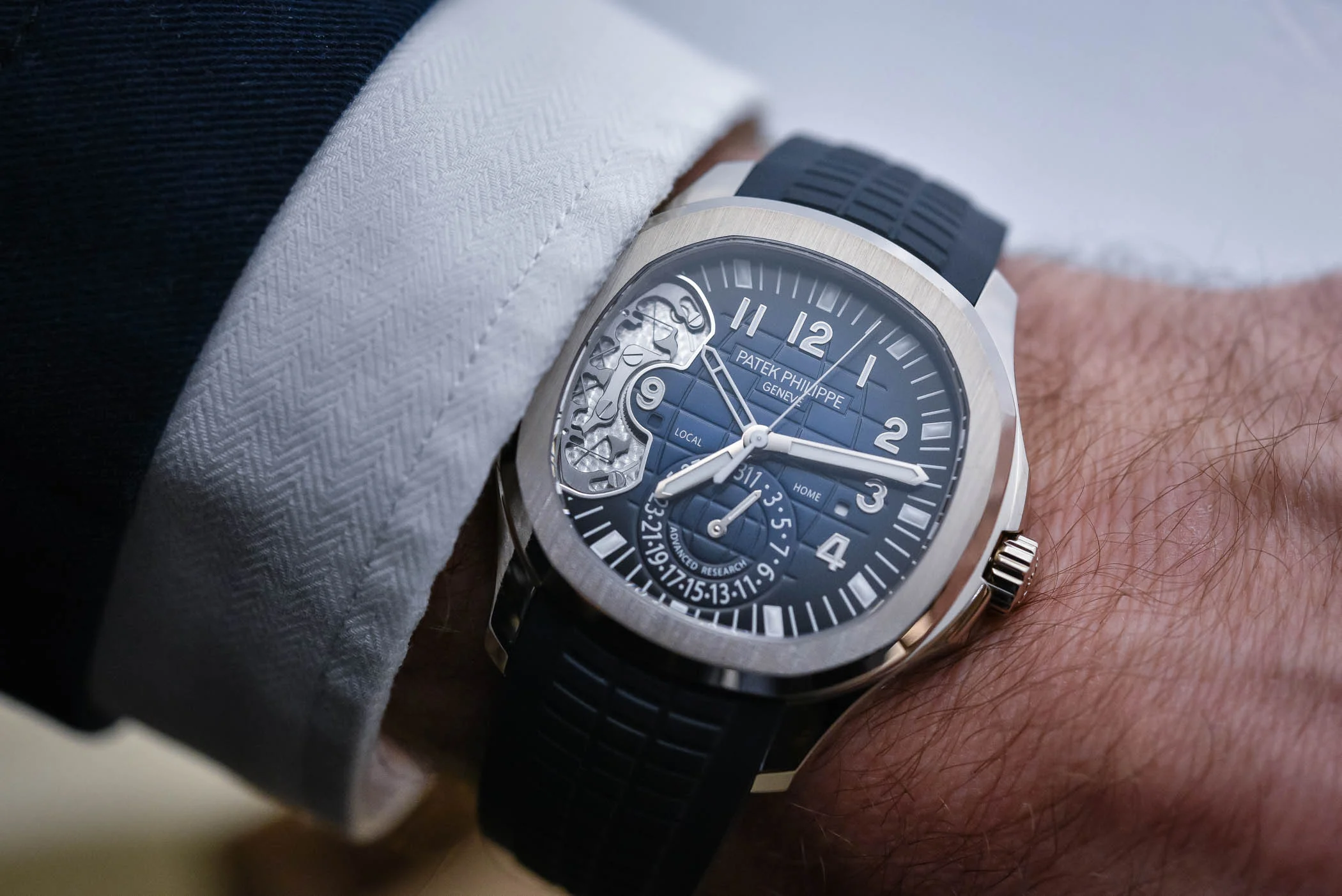
Patek Philippe unveiled the limited-edition Aquanaut Travel Time Ref. 5650G, featuring the latest technology developed by its Advanced Research program. With its unusual aesthetics and impressive technological advances, it quickly became one of the most talked about watches at Baselworld. Today, we’re going hands-on with this incredible timepiece to learn more about what Patek Philippe is calling ‘two important innovations in the field of horological design’ and to see just how practical the watch is for everyday wear and use.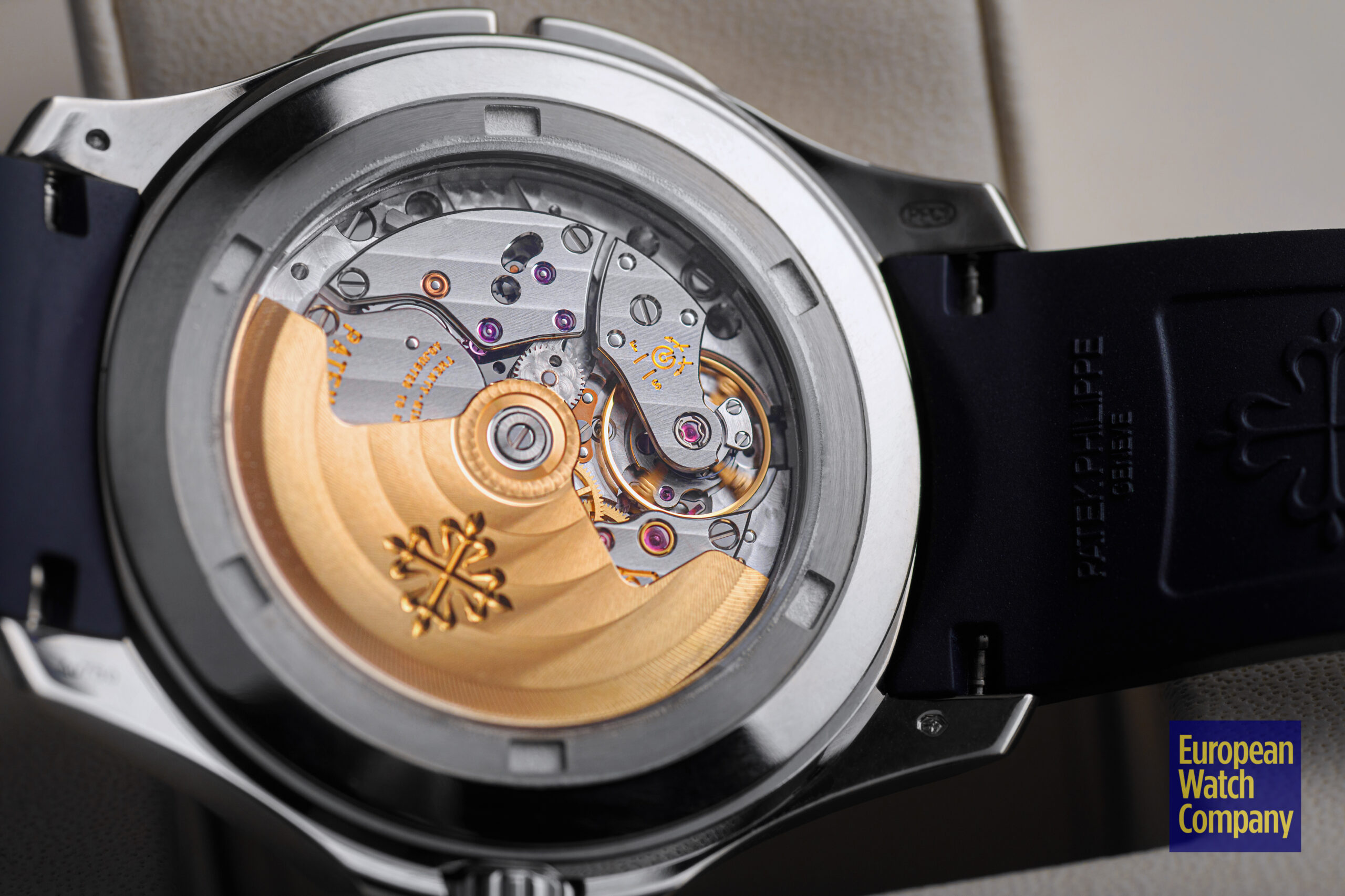
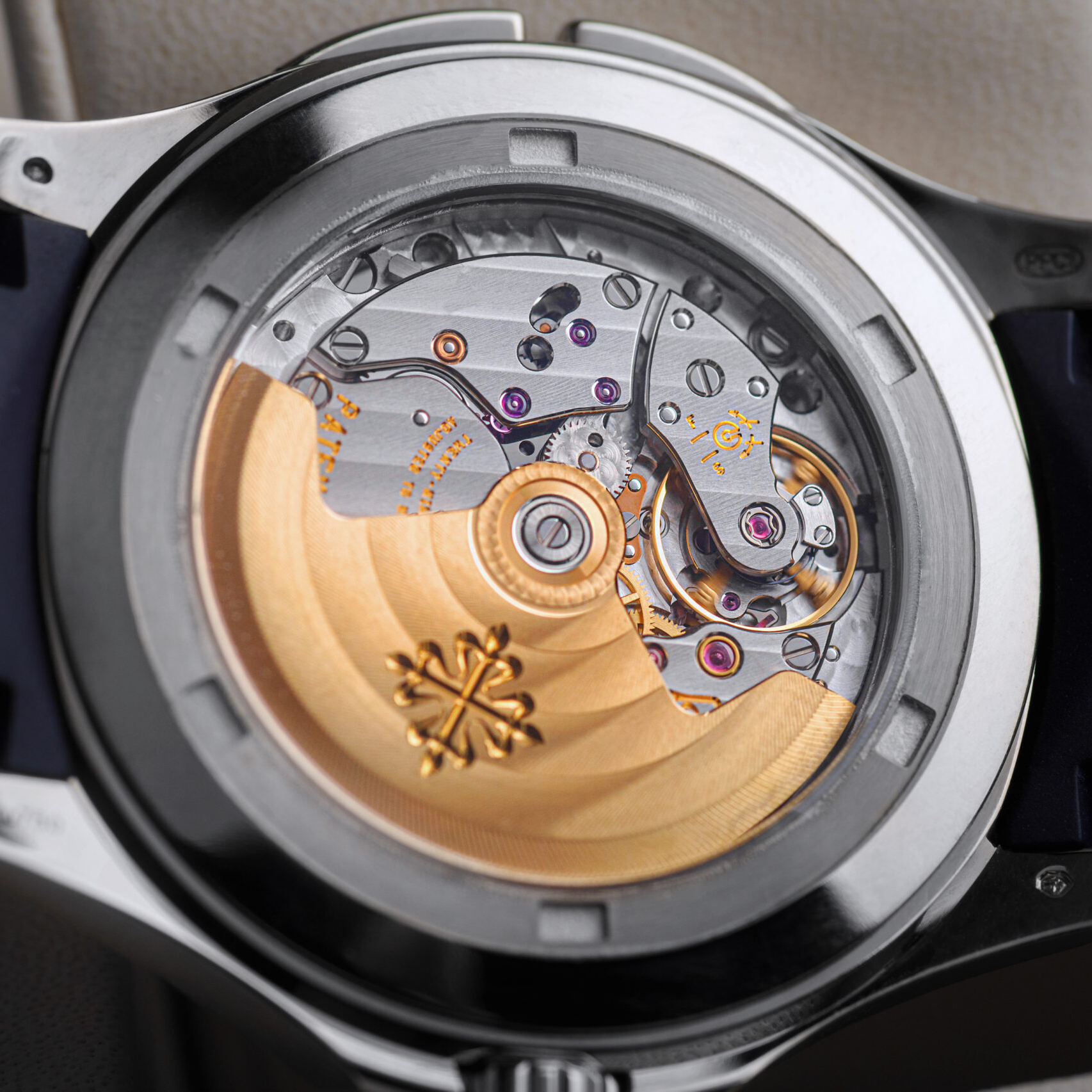
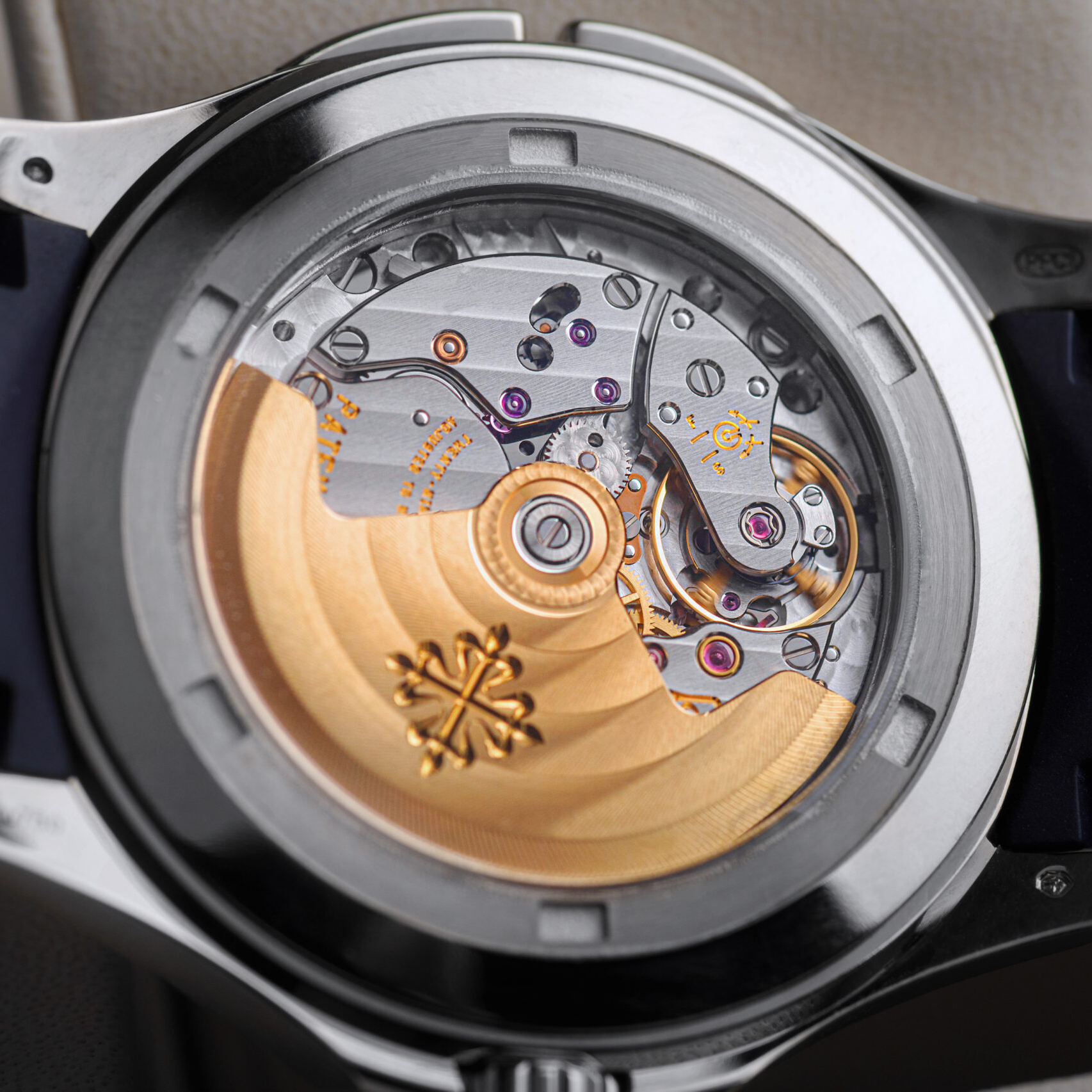
Visible through the sapphire caseback is Patek’s automatic calibre 324 S C FUS, complete with the new Spiromax® balance spring. Measuring 31mm in diameter it beats at a steady 28,800vph and offers a max power reserve of 45 hours. Adorned with the Patek Philippe Seal, the movement is beautifully finished and is rated to -1/+2 seconds maximum daily rate deviation. 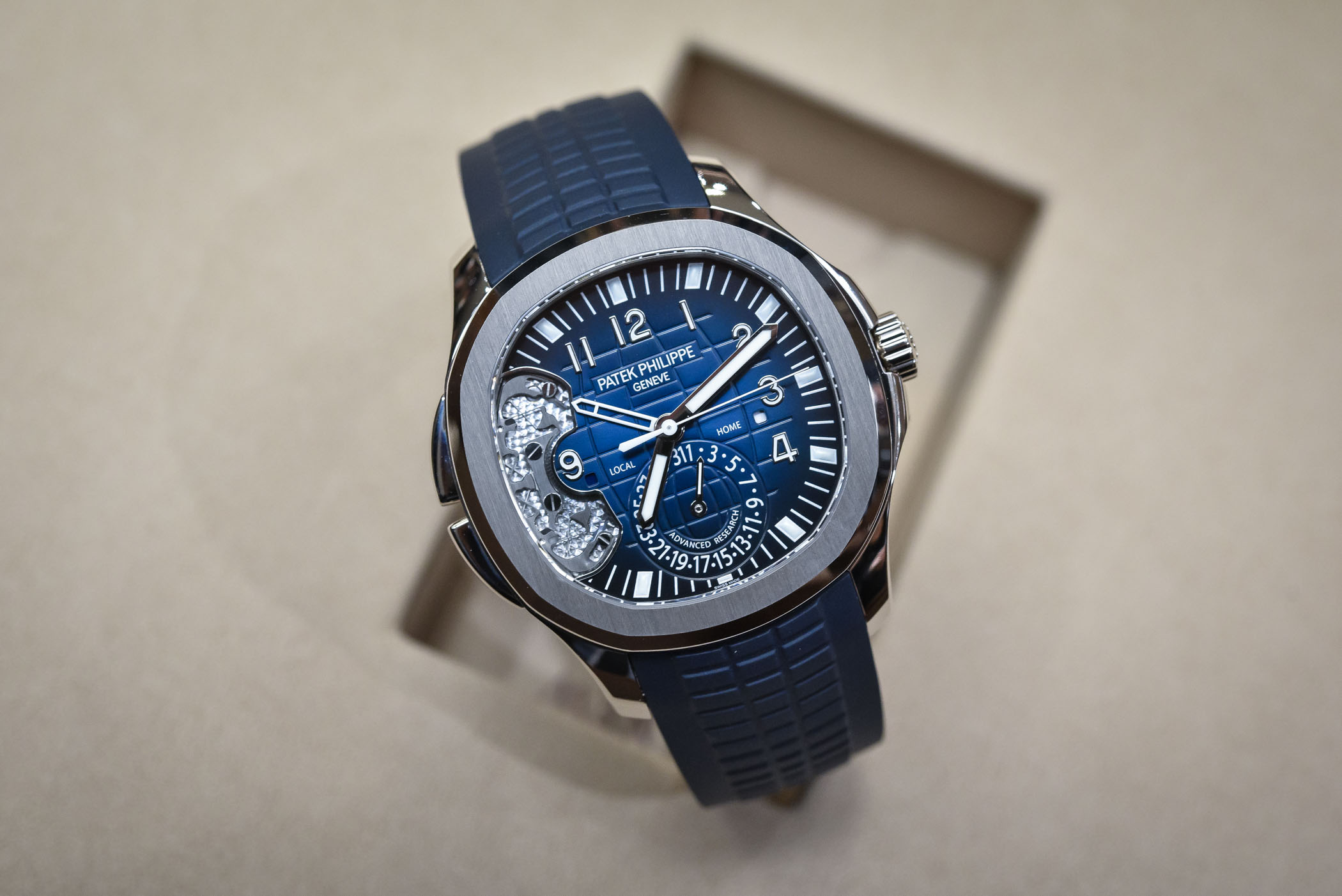
It’s been just over a decade since Patek Philippe introduced the Spiromax® balance spring and ever since, the company has been working to make it even better. Following several years of R&D, the manufacture unveiled its new spring, which sees the original outer boss now paired with an inner boss. The outer boss, also referred to as the Patek Philippe terminal curve, improves the isochronism of the balance in all positions by assuring the adequately concentric expansion and contraction of the balance spring. Conversely, the inner boss offsets positional changes of the centre of gravity to assure the highest possible rate accuracy in vertical orientations. This means that the watch will not run slower or faster regardless of its orientation.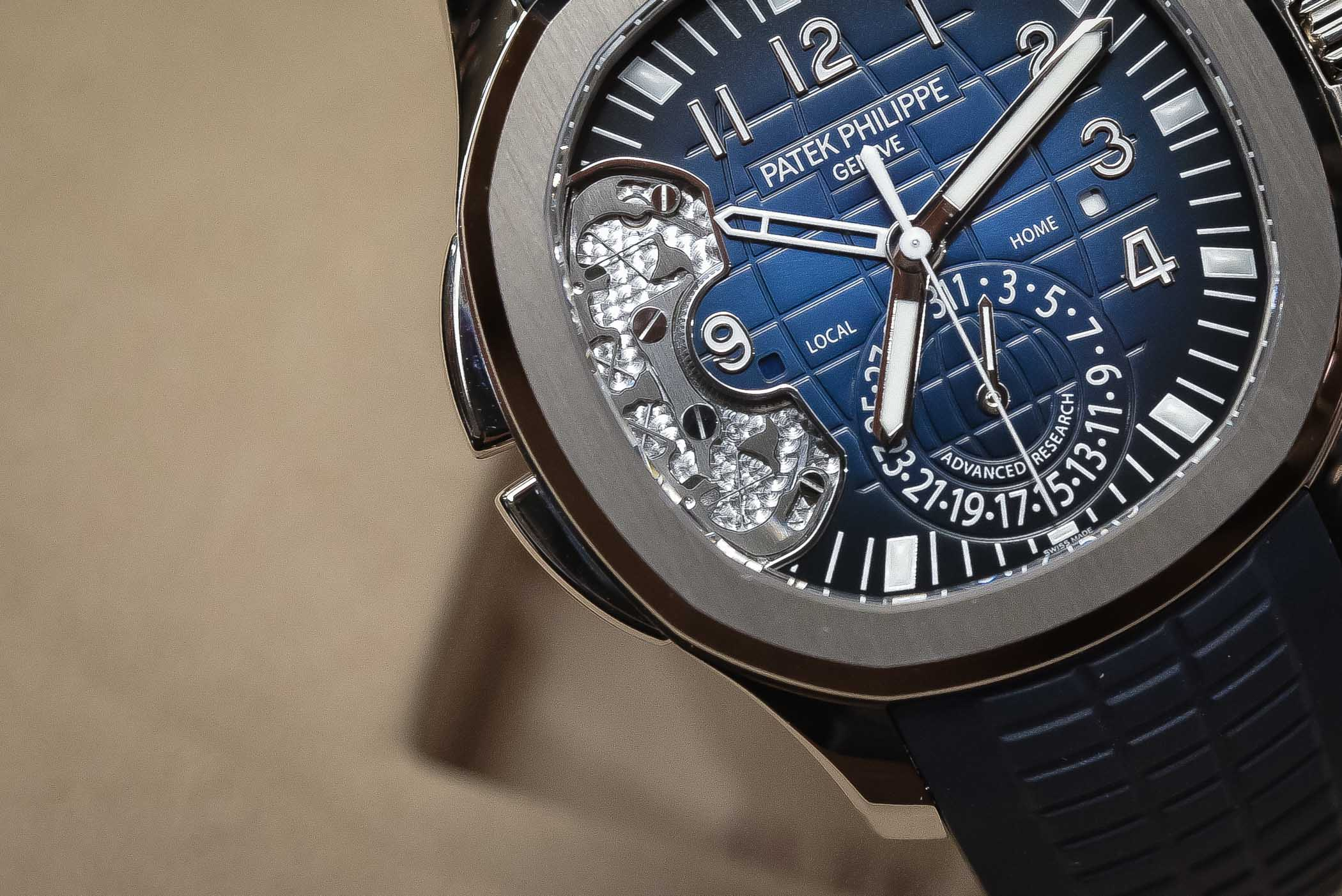
The main part of this mechanism consists of four crossed leaf springs – two for each corrector button (one for the setting lever, one for the beak that advances the gear rim), each with defined pressure points. Each individual leaf spring is extremely thin, and they cross over each other at a distance of just 150 microns. Also manufactured in conventional horological steel, the development of the whole system required sophisticated computer simulations and over 500 hours of computer modelling. Cutting-edge, computer-programmable machines were then used to manufacture the components, which explains why this type of technological advancements using simple steel was not feasible before.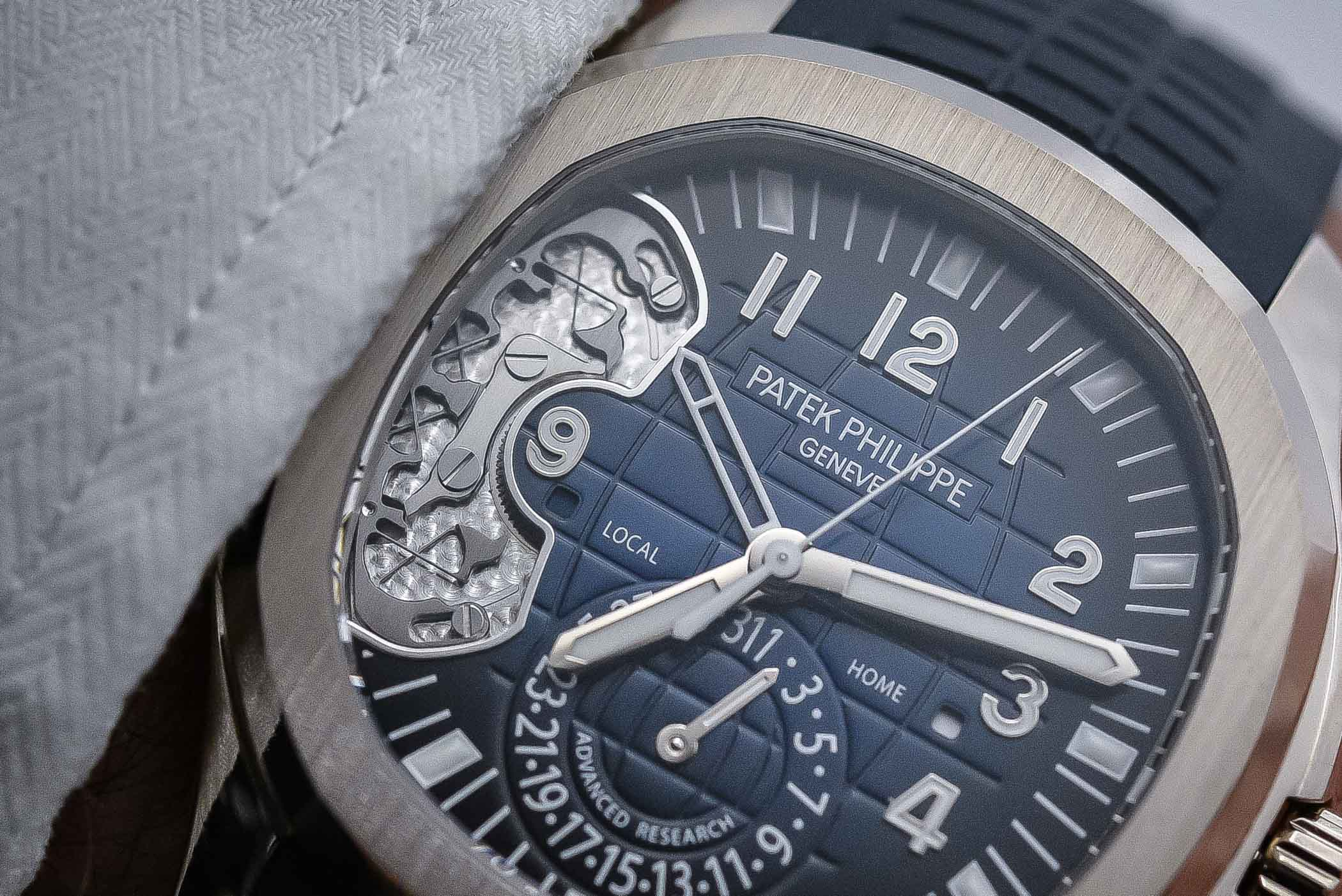
The result is really quite impressive. Before the development of this new part, the standard GMT mechanism was comprised of 37 individual parts. Now, it has been reduced down to just 12 parts, and perhaps more importantly, there are no gears or pivots. This means there is no mechanical play, no friction, and no arbor wear, which means completely lubricant-free functionality. It also means faster assembly – there are just 4 screws holding it all together – and a flatter silhouette (1.24 mm versus 1.45 mm). 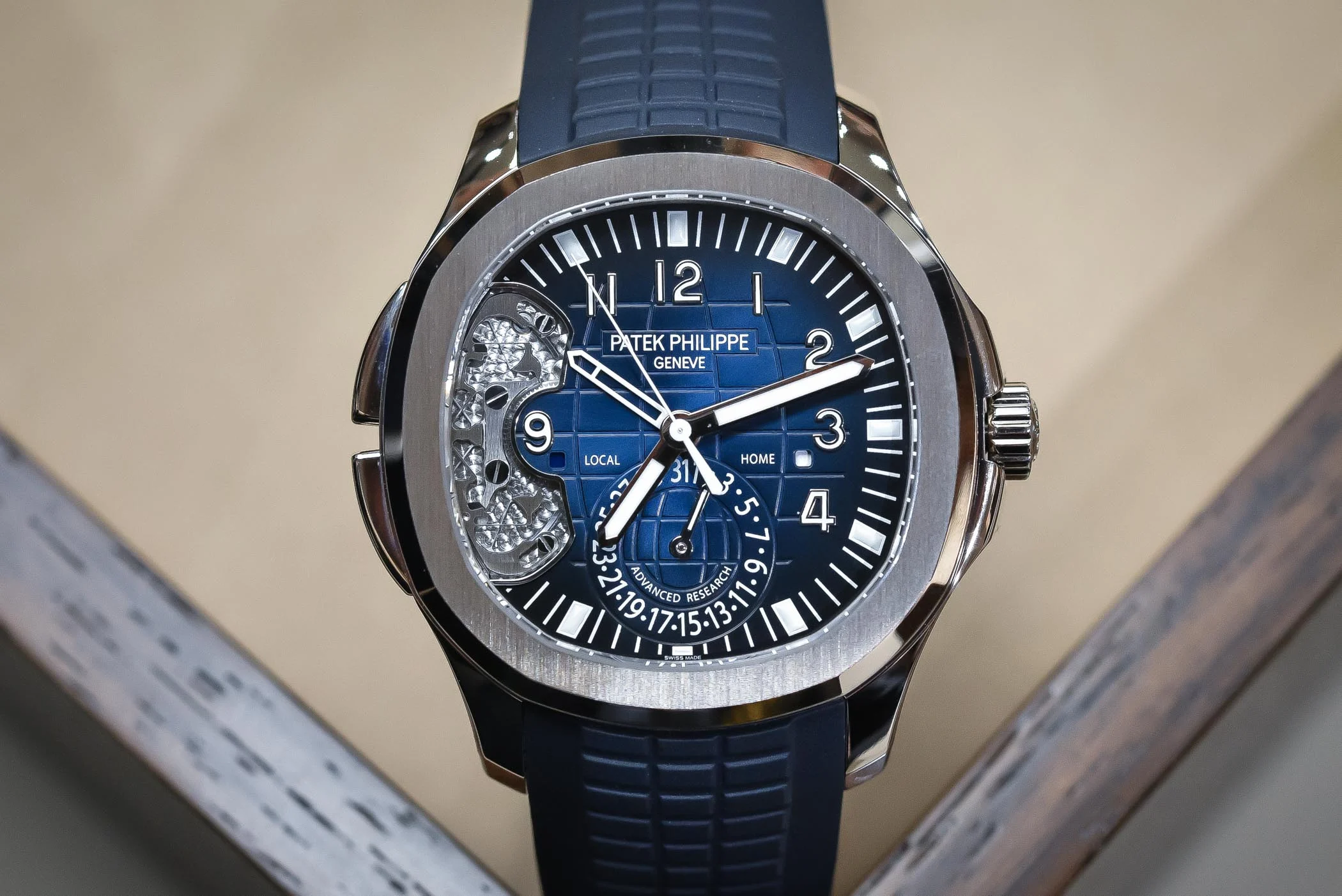
The big kicker of course, for hardcore Patek fan, in particular, is the partially open-worked dial, which puts the time-zone correction mechanism on full display. This was a bold decision by Patek as it’s a much more futuristic look from the brand than its buyers are used to but ultimately, I think it was the right one. Showcasing the technology in this way immediately allows the user to not only see it in action in real time but also to marvel at how apparently simple in construction it appears.
The other thing to keep in mind is that this Patek Philippe we’re talking about, which means that all the surfaces of the new mechanical setting have been carefully finished and decorated according to Geneva watchmaking traditions. The visible surfaces are precision ground, the invisible undersides carefully brushed, and the insides of the leaf springs sandblasted. All edges are meticulously chamfered and polished (except, for functional reasons, those of the leaf springs). The surfaces around the bores for the mounting screws are circular grained. Under the loupe the level of detail is astonishing but even just looking at it with the naked eye it is visually quite attractive, albeit somewhat unexpected at first.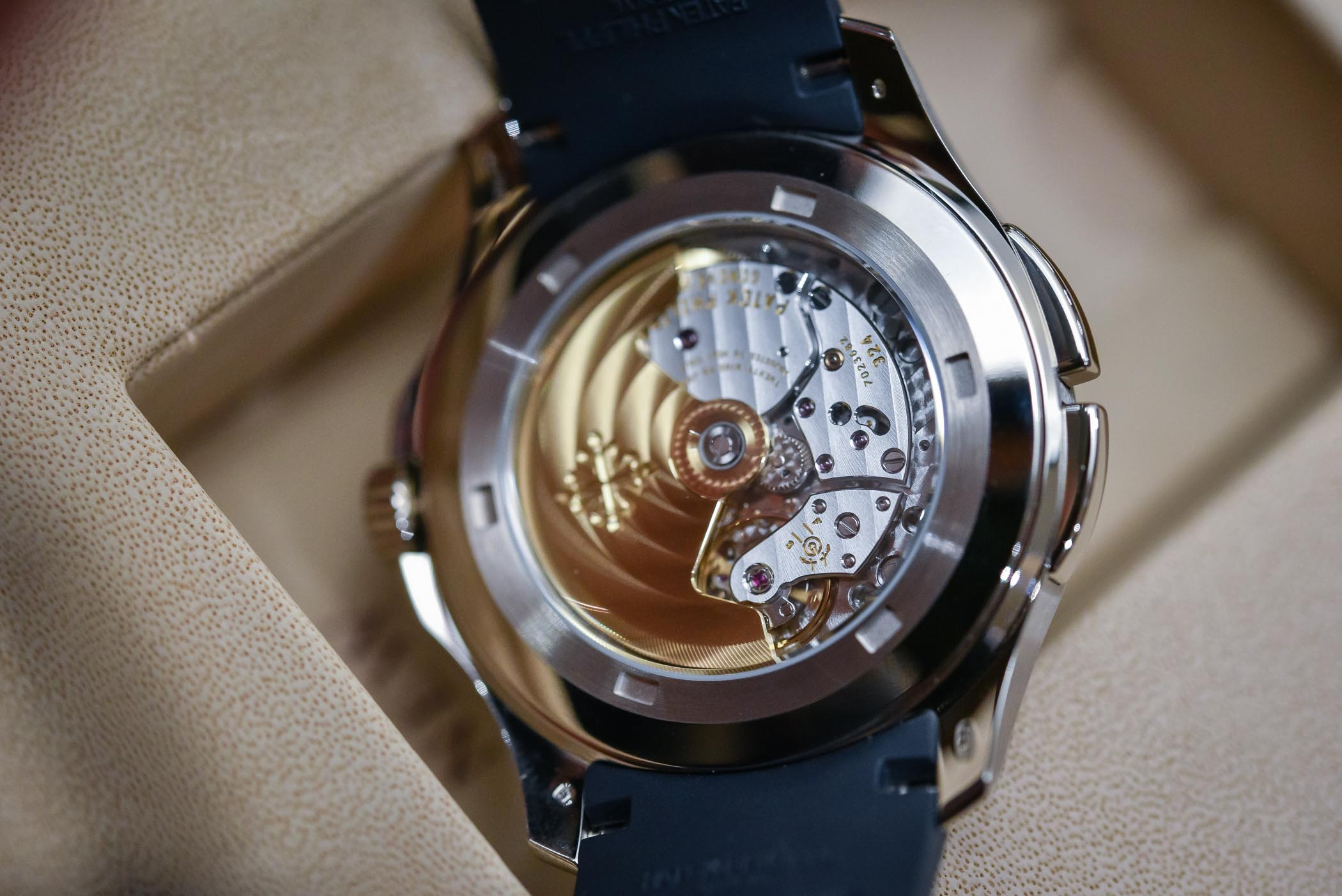

WEBSITE POLICY
WILL I BE CHARGED FOR DELIVERY AND WHEN WILL THE GOODS BE SHIPPED?
RETURN /EXCHANGE OF PRODUCTS

You have successfully commented, please wait for review
Copied Successfully
You can enjoy up to 1 free gift!